 Bruce Elving had a NERW-land connection as well: a Syracuse University graduate, he was one of several applicants vying for the 100.9 frequency when it was added to the Syracuse-area dial in the early 1970s, and he returned on occasion to Syracuse for reunion visits.
 After a bit of frenzied digging, it turns out that the class A signal on 98.5 isn’t a completely new facility after all – it’s the infamous “Meyersdale FM” that went unclaimed in one round of FCC spectrum auctions, then went to EMF for $376,000 in another round of auctions back in January. It also turns out that, under the FCC’s new rules for moving an FM allocation, it’s going to be much easier for moves like this one to happen in the same stealthy way this one did, through a minor amendment to a pending application.
 The big number first – Galaxy will pay Clear Channel $3.1 million for its nine-station cluster in Utica/Rome. But Levine won’t need anywhere near that much cash by the time he’s done spinning off five of the Clear Channel stations and one more from his existing cluster.
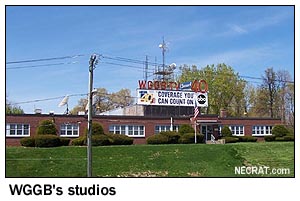 Springfield always seemed like something of an odd market for Sinclair, which entered with the $310 million purchase of Guy Gannett’s six TV stations (including WGME-TV in Portland, Maine, as well) in 1998.
NorthEast Radio Watch 4/22/2024: It is High. It is Far. He is Gone.
In this week’s issue… Sterling's abrupt Yankees exit - Columbia strife affects WKCR - Zeman exits WVTK - Buffalo Broadcasters name honorees

In this week’s issue: New owner for Albany’s WXXA – FCC quashes Pittsburgh “Franken-FM” – Howie stays at WRKO, unwillingly – WEEI to split AM, FM – Remembering Al Brady Law
by SCOTT FYBUSH
*The Albany, NEW YORK television market is only the third-largest in the Empire State – at number 58, it ranks far behind #1 New York City, of course, and also just back of #50 Buffalo. Until now, though, Albany has boasted something Buffalo didn’t have, and neither did lower-ranked Rochester, Syracuse, Binghamton, Elmira, Utica, Watertown or Burlington-Plattsburgh: among all the upstate markets, only Albany could claim four independently-operating local TV newsrooms at each of its “Big Four” network affiliates.
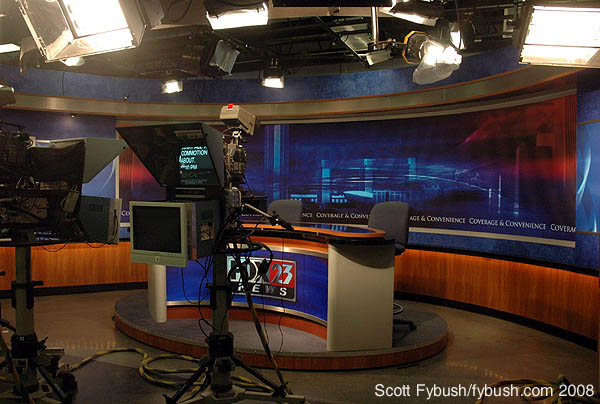
With the selloff of Newport Television’s properties, that’s about to change. Newport’s Fox affiliate in Albany, WXXA-TV (Channel 23), wasn’t part of the big chunks of station sales announced a week ago, in which most of Newport’s stations were split up among Nexstar (which got the Syracuse, Watertown, Binghamton and Elmira markets), Cox and Sinclair, which already owns the Albany-market duopoly of WRGB (Channel 6)/WCWN (Channel 45).
Instead, WXXA has now been sold to a new group called Shield Broadcasting, headed by veteran broadcaster Sheldon Galloway. Shield will pay $19.4 million for WXXA, but it won’t operate the station – instead, it plans enter a shared-services agreement under which WXXA will be run by Young Broadcasting’s ABC affiliate, WTEN (Channel 10).
The details of the agreement haven’t yet been announced, but it’s a pretty safe bet that when it takes effect later this year or early in 2013, WXXA’s existing studios on Corporate Circle will be shuttered and its local newsroom will be merged into WTEN’s operation over on Northern Boulevard. Under Newport, WXXA has run an extensive schedule of local newscasts for a medium-market Fox affiliate, programming from 6-8 AM, 5-5:30 PM and 10-11:30 PM. Some of those shows (the 6 AM hour, the 5 PM newscast and the 11 PM newscast) overlap with existing WTEN newscasts and are likely to give way to syndicated fare, while the 7 AM and 10 PM hours will likely continue out of the WTEN newsroom.
WXXA’s sale leaves just one Newport station in the region without a buyer: Rochester’s WHAM-TV (Channel 13) also couldn’t go to Nexstar because the company already owns WROC-TV (Channel 8) and manages Sinclair’s WUHF-TV (Channel 31), and so far it’s still on the market.
[private]
*Radio People on the Move: Former Clear Channel ops manager Stephen Giuttari stays in the Hudson Valley as he joins Townsquare Media’s Albany cluster (rock WQBK/WQBJ, sports WTMM, adult hits WQSH, country WGNA and urban HD2/translator “Hot 99.1”), also to serve as operations manager. Down the road at Albany Broadcasting, Crista Leigh is the new news and traffic director for WROW (590) and its sister stations, moving across town from WGDJ (1300), where she was a news reporter/producer. Up north in Glens Falls, Chris O’Neil is the new PD at WFFG (Froggy 107.1), where he moves down US 4 from WJEN (105.3) in Rutland, VERMONT. Jackie Donovan had been programming Froggy; she stays with the company to program WNYQ (101.7).
In Buffalo, radio news veteran Mark Leitner retired from WNED (970) at the end of July, ending a radio career that began way back in 1975 at WIZR (930) over in Johnstown. In 1979, Leitner moved down the Thruway to a much bigger 930, WBEN in Buffalo, where he worked until 2002 as a news anchor and reporter. After a brief detour into teaching, Leitner returned to radio in 2003 as WNED’s local “All Things Considered” host, and that’s where he stayed until last week, when he retired to a new home in Florida.
In Elmira, Steven Mills is the new PD of Pembrook Pines’ WOKN (99.5 Southport), moving east along I-86 from Olean’s Colonial Radio Group, where he served as operations manager.
*And we close our Empire State notes with a remembrance of Al Brady Law, whose career as a DJ and then as a programmer included stops at some of the biggest stations of the 1970s and 1980s.
As “Al Brady,” he was a prominent on-air talent at stations such as New York’s WOR-FM/WXLO, WWDJ and WNBC, and under his full name his time as a program director included stints at Boston’s full-service giant WHDH and then, in 1979, at a transitional point in the history of New York’s WABC. Law was faced with the impossible task of shifting WABC from top-40, an increasingly unsustainable spot for an AM station, to a more full-service approach. That change marked the end of some WABC careers such as Harry Harrison and Chuck Leonard, but it gave some new voices such as Johnny Donovan and Howard Hoffman a spotlight in the waning days of Musicradio.
Law recovered from his stint at WABC with a much more successful run at NBC’s WYNY (97.1), where he served as general manager and eventually as NBC’s vice-president of radio programming. In later years, he worked everywhere from Milwaukee to Houston to Toledo to Birmingham, eventually retiring to New Hampshire, where he died last Monday morning of a brain tumor at age 67.
 *Few talk hosts in history have milked the “I hate my employer” schtick longer and harder than MASSACHUSETTS talk veteran Howie Carr – and now he’ll have a few more years of griping about Entercom’s WRKO (680). Last week, Entercom exercised an option on Carr’s contract that will keep him on the AM dial until the end of 2014.
“I’m very disappointed,” Carr told the Boston Herald on Thursday. “I was hoping I’d get parole. But there’s only two years left on my bit and I now know the exact day I’m leaving. I can do this standing on my head.”
Carr’s contract woes with WRKO go back many years now, including an ill-fated attempt to jump ship to Greater Media’s WTKK (96.9) five years ago that somehow ended with not only a new WRKO contract, but a contract that included this two-year additional option. For Entercom, even a disgruntled Carr is better than no Carr at all; while Howie’s audience is aging and shrinking, he’s still the star voice on a station that’s otherwise been struggling badly to develop new talk talent and to keep listeners over on the AM side of the dial even as more and more high-profile content moves to FM.
Entercom itself, of course, is not immune to the lure of the FM dial. Not quite a year after adding an FM simulcast to its most valuable programming stream, sports radio WEEI, Entercom will pull WEEI programming off the 50 kilowatt AM signal at 850 that WEEI has called home since 1994.
 When WEEI-FM set up shop at 93.7 on the dial (the Lawrence-licensed signal previously known as “Mike FM” WMKK) last fall, it was widely anticipated that the 850 signal would be repurposed, and the very scenario most often floated is the one that’s coming true: while 93.7 will carry WEEI’s local talkers, Red Sox baseball and Celtics basketball, the 850 signal will become a full-time ESPN Radio outlet. The national network hasn’t had a full-time presence on the Boston dial since the demise of WAMG (890)/WLLH (1400) a few years back, and while it won’t draw huge ratings in a market that’s obsessed with its local teams, it will provide an inexpensive source of programming for an AM signal that’s still one of the market’s best – not to mention at least a small new revenue stream for Entercom, which gave up the “Mike FM” revenue stream to protect WEEI last year.
The move is likely to draw at least some static (both figuratively and literally) from a few corners of the WEEI universe: while 93.7 is a full class B signal that covers most of the Boston market quite well, it has trouble penetrating the massive wall of RF coming from the Prudential Tower in Boston’s Back Bay – which means that if you’re listening to a cheap portable radio in the Fenway Park bleachers, 93.7’s signal can be easily overloaded by all the nearby Pru FMs while 850 blasts right in. (There are overload issues as well near the FM signals on the Needham/Newton tower farm, making 93.7 a challenge on cheap radios in those affluent areas.)
And while it’s hampered by nighttime directional pattern issues in Boston’s far western suburbs, the 850 signal is a champ going north and south at night, where thousands of Red Sox fans depend on it in spots as distant as the Maine coast and Cape Cod. Will Entercom keep nighttime Sox games on 850 as well as 93.7? Stay tuned…
*In Brockton, WXBR (1460) is off the air pending an ownership change. Jhonson Napoleon’s Azure Media paid Business Talk Radio Network $250,000 for the former WBET, and as soon as the deal closed on Friday, the station fell silent for the final time from its longtime home at 60 Main Street. Those studios were the last remaining tenant at the building that once housed WBET’s former parent, the Brockton Enterprise, and it appears Azure won’t operate the station from that location when it signs 1460 back on the air in “30 to 60 days.” Nor will it be keeping WXBR’s local staff; they were out of work as soon as the sale closed.
*The WFNX callsign has a new home, and like WBCN it’s headed to retirement down south. Last week, Alex Langer, owner of WSRO (650 Ashland), requested the WFNX calls for his construction permit on 1120 in Coral Springs, Florida, up at the northwestern corner of the Miami-Fort Lauderdale radio market. The calls became available, of course, when longtime owner Steven Mindich sold his 101.7 license (now WHBA Lynn) to Clear Channel; while Mindich continues to operate “WFNX.com” as a streaming service, only licensed stations can officially hold callsigns. (And on the heels of closing WFNX’s on-air signal, Mindich is also rearranging his Boston print lineup: this fall, the weekly Boston Phoenix will merge with glossy sister magazine Stuff to create a new glossy Phoenix weekly.)
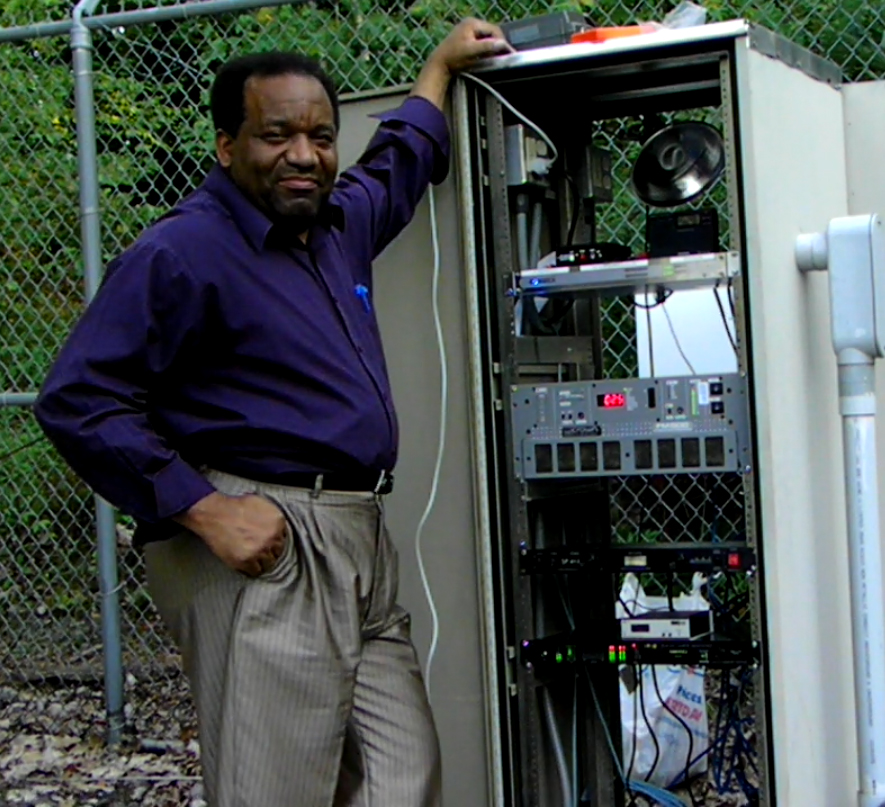
*Out in western Massachusetts, WLHZ-LP (107.9 Springfield) has moved down the dial to 98.7 in search of a clearer frequency. The religious station made the move at 5:00 Thursday afternoon. Our colleague Mike Fitzpatrick from NECRAT.us not only sent us the picture of Pastor Julio Edwards of WLHZ licensee La Hora Ministerio with the new 98.7 transmitter, he also did the engineering for the new signal, too!
*There’s a new name on the doors at WBSM (1420)/WFHN (107.1) in New Bedford – and in Augusta/Waterville (WJZN-WTVL/WMME/WEBB), Bangor (WDEA/WEZQ/WWMJ/WQCB/WBZN) and Presque Isle (WQHR/WBPW/WOZI), MAINE and Binghamton, New York (WNBF/WYOS/WHWK/WAAL/WWYL), too. That’s because Cumulus and Townsquare closed on a deal last week that sends those clusters, most of them formerly Citadel properties, to Townsquare Media along with stations in five other states. Townsquare, in turn, gives up its stations in Peoria and Bloomington, Illinois to Cumulus. At least in the short run, there aren’t big changes planned at any of the new Townsquare signals, but we’d have to imagine the company will quickly be looking at some synergies between at least the Binghamton signals and its existing properties in nearby Oneonta and Utica.
*In CONNECTICUT, there’s a TV callsign change: WSAH (Channel 43) in Bridgeport took those calls in 1999 when it was co-owned with the Shop At Home TV network, and it kept them around even as its programming flipped to leased-time infomercials and other fare in the years that followed. Now it seems to have settled down with the Chicago-based MeTV network, and it’s become WZME to match its new affiliation.
 *A familiar callsign and format will return to southern NEW JERSEY at the end of August. WFNE (106.3 North Cape May) quietly changed calls to WJSE in June, and now it’s preparing to relaunch the “JSE” modern rock format that lived for many years at 102.7 on the dial in Petersburg (now WWAC 102.7 Atlantic City).
There’s a website up now, as well as a TV ad indicating that the syndicated Bob & Tom morning show will stay in place when the format shifts from classic hits to modern rock around August 31.
*Plans for a new “Franken-FM” at 87.7 on the dial in western PENNSYLVANIA appear to be on hold now that the FCC has made what appears to be a sudden change of direction on those odd facilities that are licensed as Channel 6 low-power TV outlets but operate primarily for the benefit of FM radio listeners who can tune down to their audio carriers just below the bottom of the FM radio dial.
Venture Technologies Group has been at the forefront of the “Franken-FM” movement with signals in Chicago, Los Angeles and San Jose, among others – but a letter from the FCC last week rejected Venture’s attempt to convert Pittsburgh’s WBPA-LP from analog operation on channel 30 to hybrid analog/digital operation on channel 6. Venture told the FCC it intended to use a technology called “Bandwidth Enhancement Technology” developed by transmitter maker Axcera to reduce the WBPA digital TV signal (and that of a channel 6 operation in Lubbock, Texas as well) to occupy less than the full 6 MHz bandwidth, allowing the upper part of the channel to be used for an analog audio signal that would be compatible with FM radios, with an effective radiated power of up to 33% of the digital power, giving WBPA a full kilowatt from its tower in Pittsburgh’s North Hills.
Had it been granted, the application would have allowed WBPA – and presumably other “Franken-FM” signals such as WNYZ-LP in New York – to escape the 2015 deadline that will end Channel 6 analog operations. The FCC’s denial of Venture’s applications makes it look increasingly likely that the deadline will stick, and thus that 2015 will also mark the end of the “Franken-FM” era.
*Radio People on the Move: Gregg Whiteside has been picked as the permanent morning classical host at WRTI (90.1 Philadelphia) and its network of stations across three states. Whiteside, a longtime announcer at New York’s WQXR in its 96.3 days, replaces Dave Conant, who took himself off the air to focus full-time on his general manager duties at WRTI.
In the Pittsburgh market, Jeremy Mulder (known on-air as “Danger Frog”) is the new assistant PD at Keymarket’s country “Froggy” stations (WOGI/WOGG/WOGH), where he continues to do the afternoon shift as well.
[/private]
From the NERW Archives
Yup, we’ve been doing this a long time now, and so we’re digging back into the vaults for a look at what NERW was covering one, five, ten and – where available – fifteen years ago this week, or thereabouts. Note that the column appeared on an erratic schedule in its earliest years as “New England Radio Watch,” and didn’t go to a regular weekly schedule until 1997. One Year Ago: August 8, 2011 – *NEW YORK is now the largest state with its own state law banning pirate radio. It’s been a month and a half since state lawmakers passed a bill that echoes similar laws in New Jersey and Florida making unlicensed radio operation a state-level crime, and while members of the New York State Broadcasters Association were hoping to see Governor Andrew Cuomo sign the bill into law at their June convention near Lake George, they’re pleased to see it signed, period. Unlike other state laws that make unlicensed broadcasting a felony, New York’s version makes a first-time conviction for pirate radio only a class A misdemeanor, though it also provides for confiscation and destruction of the equipment used by pirate operators. Those penalties still promise to be a somewhat stronger deterrent than the typical FCC sanction of a $10,000 forfeiture order, a sum that’s rarely paid by pirate operators who often aren’t even US citizens. As in Florida and New Jersey, the idea behind the law is to give local law enforcement a greater incentive to help beleaguered broadcasters fight an onslaught of pirates that has so far proved to be beyond the capacity of a budget-strapped FCC Enforcement Division to control. Even with the new law in place, the challenge of quelling New York City’s pirate operators is a huge one: many of the illegal stations come and go on a regular basis from transmitter sites that are well hidden in the city’s forest of high-rise buildings, making it hard sometimes even to pin down a pirate’s transmitter location, never mind catching the broadcaster in the act before the signal is moved to another site. And unlike Florida, where the state’s Department of Law Enforcement has become an aggressive partner with legitimate broadcasters in hunting down and arresting pirates, law enforcement in New York City and vicinity is largely the purview of local police departments, many of which already have their own hands full with other serious crimes. We’ll be watching closely, of course, as the new law takes effect in November. *The rest of our Empire State news also focuses on New York City, at 395 Hudson Street, no less – but while Merlin’s WEMP (101.9 New York) kept chugging away with its “FM New” not-quite-a-format-yet, the news last week was being made down the hall at one of the remaining Emmis stations, WRKS (98.7 Kiss FM), where there’s a new program director. Jill Strada is out after two years, and in to replace her is Jay Dixon, who’d been production/public service director at Kiss in the 1990s. Dixon went on to program top-rated WBHK in Birmingham and then WALR-FM in Atlanta for Cox, and now he returns to New York while Strada heads south to program WPOW-FM in Miami. *It was a very, very quiet week upstate; the biggest news came from sleepy Canandaigua, where the Finger Lakes Radio Group pulled the plug on the oldies at WCGR (1550) and the FM translator at 104.5 that’s where most of its audience now listens. Last Monday, WCGR flipped to a simulcast of the company’s latest acquisition, country WFLK (101.7 Geneva), which is now imaging as “K-101.7 and 104.5.” The move also ends the simulcast on WCGR of the morning show from Geneva’s WGVA (1240). *In the days before Radio-Locator and 100000Watts.com and FCCInfo and all the rest of our modern on-line station listings, there was only one serious place to get a comprehensive directory of what was what on the FM dial. Beginning with its first edition in 1971, Bruce Elving’s FM Atlas was a constant companion to DXers and to many broadcasters as well. Even as on-line information sources proliferated in the 21st century, Elving continued to update his listings in the annual directory and the monthly FMedia! newsletter, keeping track of details that sometimes escaped other directories. (Many is the station that received a postcard query from Dr. Elving’s Minnesota home, inquiring whether it was operating in $tereo or running any subcarriers.) So it was a blow to the DX hobby, and to the FM radio industry, to learn of Dr. Elving’s death in late July, of a heart attack suffered while he was in southern California for cancer treatment.
He was also a longtime friend of this column and your editor, frequently quoting NERW items in FMedia! and supplying information we used in NERW as well – and we had the pleasure of visiting him at his “Publishing Estate” outside of Duluth during our 2005 Big Trip. Elving is survived by his wife, Carol, and three daughters – and by 21 editions of the FM Atlas, the most recent one published just last year (and still available, in limited quantities, at our Fybush.com store…); a memorial service is being held in Minnesota today. *There’s now high-definition local TV news in NEW HAMPSHIRE, and it comes, unsurprisingly enough, from Hearst’s WMUR (Channel 9) in Manchester. The dominant ABC affiliate spent much of July rebuilding its set for HD, and local HD news debuted last week. On the LPFM front, Concord’s WCNH is now less than a month away from completing its move from 94.7 (now WNHN-LP) to a new full-power license on 91.5 in Bow. Once the classical format moves to the slightly more powerful 91.5 signal, the 94.7 signal will transfer to a group called “NH News, Views and Blues,” chaired by former state representative Gordon Allen. The new WNHN will start out with nonstop blues and will eventually add local talk as well. *WMUR’s sister station in MASSACHUSETTS, WCVB-TV (Channel 5), was once the staid player on the Boston news scene, so it was something of an eye-opener last week when WCVB hired Michele McPhee as a reporter. McPhee made a name for herself as an outspoken Boston Herald columnist and parlayed that into a talk radio career, first at WTKK (96.9) and now at WRKO (680), where she’s heard from 1-3 PM weekdays. *And we note with sadness the passing of one of the busiest engineers in the region. Ken Jones had a hand in the construction and maintenance of plenty of broadcast facilities in western Massachusetts and Connecticut. While he’d most recently been working as a contract engineer, Jones had been in management with Clear Channel, at one point serving as a regional engineering manager for the company. He’d also worked for WGGB-TV and for Vox Communications. Jones was 71 when he died last Wednesday, apparently of complications from what was supposed to have been routine surgery. In addition to his wife, Delores, Jones is survived by his son, Jamieson, who’s also a broadcast engineer. Funeral services will be held tomorrow in Springfield. *There’s a new format on the air at what had been PENNSYLVANIA‘s last smooth-jazz signal: after pulling the plug a week ago on “Smooth Jazz 92.7,” WSJW (92.7 Starview) relaunched last Monday with classic rock as “92.7 KZF,” with new calls WKZF. The Hall-owned station enters a fairly crowded rock market in the Harrisburg/York area. One of those other rock-based outlets has parted ways with its founding programmer. Chris Tyler was instrumental in transforming the former WHP-FM (97.3 Harrisburg) into “The River,” WRVV, almost two decades ago – but he suddenly disappeared from the Clear Channel station’s morning-drive slot last week amidst cutbacks that also claimed several on-air traffic reporters in the region. *Duquesne University’s sale of WDUQ (90.5 Pittsburgh) took another step forward last week when the FCC denied the objections filed by several listeners and groups upset about the public broadcaster’s transfer to the new Essential Public Media group, and especially about the end of most of the jazz programming that long defined WDUQ. “Although the commission recognizes that WDUQ’s program has attracted a devoted listenership,” the decision said, “it is well-settled policy that the commission does not scrutinize or regulate programming, nor does it take potential changes in programming formats into consideration in reviewing assignment applications.” That is, indeed, longstanding FCC policy – and with the sale of the WDUQ license now having received Commission approval, the deal is expected to close within the next few weeks, bringing with it new calls for the station. *Dorothy Brunson is being remembered most prominently for her radio ownership in Baltimore, where she was one of several owners who made WEBB (1360, now WVIE 1370) a force in the black community. But Brunson, who died July 31 at 72, owned TV in Philadelphia as well, and it’s believed that when she put WGTW (Channel 48) back on the air in 1986, she became the first black woman to own a TV station. Brunson’s radio career began in New York City in the early 1960s, when she worked in the business offices at WWRL, eventually becoming the station’s assistant general manager before leaving in 1969 to become general manager of WLIB and WBLS, a post she held for almost a decade until departing for Baltimore. In Philadelphia, Brunson acquired the facilities of the defunct WKBS-TV after Field Communications shut the station down in the early 1980s; she sold the station to TBN in 2004 for $7 million cash and the assumption of $41 million in debt. *It turns out that Cogeco and Quebec’s provincial transport ministry aren’t the only parties interested in returning two of CANADA‘s handful of AM clear channels to the air. As NERW readers know, Cogeco and the transport ministry were poised to put the former CINF (690) and CINW (940) back on the air to serve as French- and English-language all-traffic signals to assist drivers navigating through Montreal construction traffic. But while the ministry announced the impending launch of the stations as a fait accompli in a press release earlier this summer, the regulatory reality was a bit more complex: while Cogeco had acquired the former CINF/CINW transmitter facility in Kahnawake as part of its purchase of Corus’ Quebec operations, the licenses for the two 50,000-watt AM signals had been surrendered to the CRTC back in 2009. And while Cogeco had hoped to restore the licenses quickly and quietly through a “non-appearance proceeding” at the CRTC, other broadcasters intervened – and that means those two AM channels now go up as part of a call for competing applications, which are due August 29. Five Years Ago: August 7, 2007 – *So there we were on Friday night, wearing our “editor of 100000watts.com” hat, plugging in call letter updates, when we noticed a new callsign – WKEL, for EMF’s new signal in Confluence, PENNSYLVANIA. That was all well and good – except for one question: what new signal in Confluence, PA? Actually, there was a second question, too: where the heck is Confluence, PA? And a third: how did a new signal in an obscure western Pennsylvania town slip right past us?
In this particular case, it turns out that EMF filed the application way back in February, it was accepted in March, and was granted in late June. So where is Confluence, and why would EMF want to move an unbuilt station there from Meyersdale? It’s a community of some 800 people, on the Youghiogheny River about 10 miles west of Meyersdale and 15 miles southeast of Uniontown – but the application calls for a transmitter site well to the northwest of Confluence, near Mill Run in Fayette County. By itself, the new WKEL won’t even approach Pittsburgh rimshot status – it’ll be nearly a 50-mile shot, on a channel that’s first-adjacent to in-town WOGI (98.3 Duquesne). But it will put a decent signal over much of Fayette County, including Uniontown and Connellville, and it will eliminate the need for EMF to feed its chain of (as yet unbuilt) “K-Love” translators serving Pittsburgh from a primary station way down in Grafton, West Virginia. At the same time, EMF eliminates a big overlap that would have existed between the Meyersdale signal and its existing WLKH (97.7 Somerset), which already serves Johnstown and a big swath of territory to the south. But in the process, it’s playing an interesting game. In order to take part in the auction for the “Meyersdale” frequency, EMF had to apply for a commercial license; an application for a new noncommercial license can only take place during a filing window, and the next window, coming this fall, will cover only the “reserved” portion of the dial, from 88.1-91.9. EMF tells the FCC it pledges to follow all the commercial rules, including building a main studio to serve Confluence. However, it also acknowledges that it has the right, at some later point, to change the station’s status to noncommercial – which it will have to do in order to follow the rest of its usual game plan, including filing for the main-studio waiver that will make WKEL a satellite of KLVR in California and daisy-chaining the noncommercial translators that will bring the signal into Pittsburgh. It’s all strictly within the letter of the rules, as is everything that EMF does, but it seems – to us, anyway – to stretch the spirit of the rules more than a little bit. *Up in Montrose, between Scranton and Binghamton, WPEL may soon be abandoning the 1250 frequency that’s been its home for 60 years. The southern gospel station (sister to the big-signal religious WPEL-FM on 96.5) has been granted a CP to move down the dial to 800, where it will still run 1000 watts by day, and will add night service with 135 watts, all non-directional. There’s a new AM signal coming to the southeastern Pennsylvania airwaves, as Four Rivers Community Broadcasting’s application for 1390 in Morrisville becomes one of 46 “singleton” applicants from the 2004 filing window to be cleared by the FCC to take the next step. That’s the filing of a full Form 301 application, due by September 26. Four Rivers’ initial application for the Bucks County signal asked for 250 watts, non-directional day and night from a tower on the north side of Levittown. The obituaries for Tom Snyder, who died July 29 at 71, focused – and rightly so – on his national talk-show work for NBC (“Tomorrow”), CBS (“The Late Late Show”) and so on. But we can’t let this giant of the industry go without noting the role he played in the early days of “Eyewitness News” at Philadelphia’s KYW-TV (Channel 3), where he arrived in 1965 to anchor the noon newscast. Snyder also hosted a morning talk show, “Contact,” at the station before being called up to the big leagues to anchor at KNBC in Los Angeles in 1970. He later anchored at New York’s WNBC-TV (1974-77) and WABC-TV (1982-85) in addition to his network gigs. We’re firing up the ol’ colortini in his memory, and watching those pictures fly through the air one last time… *In upstate NEW YORK, all the numbers are in now on the big Clear Channel/Galaxy/Roser/EMF deal that’s about to shake up the Utica radio dial, and it’s clear that both Galaxy’s Ed Levine and Ken Roser of Roser Communications come out as big winners.
EMF will pay Galaxy a total of $1,574,000 – $1,224,000 for Galaxy’s big-signal WRCK (107.3 Utica) and another $350,000 for Clear Channel rimshot WOKR (93.5 Remsen). This piece of the deal also allows Galaxy to obtain an independent appraisal of those stations’ fair-market value, and to take a charitable deduction on the difference between that value and the actual sale price. Roser, meanwhile, will pay just $650,000 for the “Kiss” combo (WSKS 97.9 Whitesboro/WSKU 105.5 Little Falls) along with WUTQ (1550 Utica) and WADR (1480 Remsen) – a remarkable price, considering Roser sold the two FMs and then-WLFH (1230 Little Falls) to Clear Channel for $2.15 million just five years ago. As for Galaxy, Levine ends up paying a net price of just $876,000 to add rocker WOUR (96.9 Utica), hot AC WUMX (102.5 Rome) and sports WIXT (1230 Little Falls)/WRNY (1350 Rome) to his cluster, plus whatever charitable deduction he can get from the EMF sale – plus the competitive edge he’ll obtain from owning WOUR and eliminating its rock-format competition, WOKR and WRCK. It’s no wonder, then, that Levine described the purchase to NERW as “the best deal I’ve ever done.” *The University of Rochester’s WRUR-FM (88.5 Rochester) is tightening its physical connection to public broadcaster WXXI, which operates the station for the university. The FCC has granted an application to move WRUR’s antenna from the Hyatt Hotel in downtown Rochester to the WXXI tower on Pinnacle Hill in Brighton. WRUR’s power level will remain almost identical – 3 kW/345′ from the Hyatt, 3 kW/358′ from Pinnacle. (Disclosure: your editor is a part-time employee of WXXI.) *Multicultural Broadcasting’s WNSW (1430 Newark) has signed off from its two-tower site next to the Garden State Parkway in Union, NEW JERSEY, and the station is now operating at reduced power from the WPAT (930 Paterson) site nine miles north in Clifton. WNSW (which changed format not long ago, from Korean to Spanish religion) holds a construction permit to go to 10 kW days, 7 kW nights, diplexing on all four of WPAT’s towers, but Multicultural has to resolve the interference issue with co-owned WNYG (1440 Babylon NY) first; it’s hoping the FCC will move quickly on its application to move WNYG out east to Medford, NY. *Sinclair Broadcast Group is bowing out of TV ownership in MASSACHUSETTS, selling WGGB-TV (Channel 40) to John Gormally’s Gormally Broadcasting for $21.2 million and restoring local ownership to the TV market for the first time since the 1983 sale of WWLP-TV (Channel 22). Gormally publishes the “Business West” business newspaper, and the ABC affiliate is his first television property.
While Sinclair has built duopolies, usually including Fox affiliates, in most of its markets, there simply weren’t enough stations in the Springfield market to make a duopoly work. WGGB also retained a full local news operation while many of Sinclair’s stations switched to the now-defunct “News Central” model. It remains far behind market giant WWLP in the ratings, and faces new competition from Meredith’s CBS affiliate, WSHM-LP, so Gormally will have his work cut out for him. In TV news from Boston, Jen Street is departing WBZ-TV (Channel 4) after 17 years, the last two of them as news director. She’s moving to the Massachusetts Eye & Ear Infirmary, where she’ll be vice president for communications; no replacement has been named yet at WBZ. Meanwhile over at WHDH-TV (Channel 7), Kim Khazei is returning to the station where she anchored from 1993-2001. After taking a break to raise her children, Khazei’s taking the anchor chair at 4 PM and 5:30 PM, as well as reporting for the 10 PM and 11 PM newscasts on WLVI (Channel 56) and WHDH-TV, respectively. It’s taken more than a year, but the FCC has now signed off on the settlement deal between Living Proof, Inc. and two of its rival applicants for the use of 91.7 west of Boston – the University of Massachusetts Boston’s WUMB and the channel’s incumbent occupant, WAVM (91.7 Maynard). For many years now, we’ve been chronicling WAVM’s fight to upgrade from its unprotected class D status to a protected class A signal, and we’re sure there are a lot of relieved folks in Maynard now that the station is in possession of a construction permit that will take WAVM from 16 watts to 500 watts/77′ DA. (Unlike an earlier WAVM CP for class A operation, which expired unbuilt some years back, we’re pretty sure this one will be built, and quickly.) WUMB has its CP, too, for a share-time operation licensed to Stow but sharing the WAVM transmitter and antenna. And Living Proof now has its CP, for 572 watts/115′ on 91.7 in Lunenburg, with a DA aimed mostly to the north. The only odd man out, as it were, is CSN International, whose application for 91.7 in Lexington has now been dismissed. And the rancor continues to grow over Howie Carr’s attempt to bolt his longtime home at Entercom’s WRKO (680 Boston) to become the new morning man at Greater Media’s WTKK (96.9 Boston); last week’s action included a countersuit from Entercom against Carr’s lawsuit seeking to free himself from his WRKO contract. That brought a couple of revelations: paperwork accidentally left unsealed disclosed that Carr is paid just under $800,000 annually for his WRKO afternoon show, and we now know that Cary Pahigian is not only president and general manager of Carr affiliate WGAN (560) in Portland, Maine – but also Carr’s agent. That’s prompted some earnest hand-wringing about conflict of interest, but as long as WGAN owner Saga Communications knows about the arrangement, who are we to second-guess it? We jumped the gun a bit on this one a few issues ago, but now our ears on the South Shore have confirmed it: WGTX (102.3 Truro), the former WCDJ, is back on the air with oldies, as “The Cape’s Oldies, Dunes 102.” It’s primarily an Outer Cape signal, and it’s ID’ing with Provincetown at the top of each hour. *And across the border in CANADA, Corus is moving forward with its AM-to-FM move at CHLN (550 Trois-Rivieres QC). The French-language talk station signed on its new FM signal at 106.9 last week, and it now has 90 days to sign off the AM dial. (Sister station CJRC 1150 in Ottawa/Gatineau is about to turn off its AM in favor of its new 104.7 FM signal, and CHLT 630 in Sherbrooke and CKRS 590 in Saguenay will be next to make the move. In Tillsonburg, CKOT (1510) is finally making its long-awaited move to FM. Its new FM simulcast, CJDL (107.3), signed on last Wednesday (Aug. 1) at 5 AM. The AM signal, Canada’s last remaining daytimer, will continue on the air, and no changes are planned at CKOT-FM (101.3 Tillsonburg), which continues with its soft AC format. Ten Years Ago: August 12, 2002 – *The Energy has run out in CANADA’s largest market. Corus is pulling the plug on the “Energy FM” dance-CHR format that’s been running on CING (95.3 Hamilton) and replacing it with country music on the 100 kW signal that serves the entire Golden Horseshoe area from Toronto to Niagara Falls. Energy moved to 95.3 with high hopes a couple of years ago, after launching on the weaker 107.9 signal licensed to nearby Burlington. (That signal became home to classic rock “Y108” CJXY, which had occupied 95.3 as “Y95.”) In the meantime, Energy had expanded to four other signals: CKGE 94.9 Oshawa, which has since returned to its old modern AC format; CHAY 93.1 Barrie and CFHK 103.1 St. Thomas-London. CHAY and CFHK will stay with the Energy format, as far as we know. Corus launched “Country 95” on the frequency last Friday (August 9), and the format is running jockless for the moment, with a full launch scheduled for next Monday (August 19). Energy’s airstaff was largely shown the door, though we hear morning jock “Big D” is headed to sister station Y108. Heading across the border, we’ll start our U.S. report in PENNSYLVANIA, where a long-dead call and format returned to life in Philadelphia last week. WSNI (104.5 Philadelphia) dropped the “Sunny” nickname and soft AC format in 1990 to go hot AC as WYXR “Star,” then went modern AC in 1999 as “Alice” WLCE. “Alice” was replaced by a day of non-stop “Here Comes the Sun” last Friday, followed by the relaunch of the old soft AC format and “Sunny” nickname, followed a few days later by the WSNI calls. Sunny challenges market-leader WBEB (101.1 Philadelphia), one of the last individually-owned major market FM stations in the country; it promises to be a good fight. The NERW-mobile passed through the Scranton area on our way to and from New York City this past week, and we know we’ll always find something different there each time we turn on the dial. This trip was no exception: on Monday (Aug. 5), Citadel flipped WCWI (94.3 Carbondale) from a simulcast of CHR WBHT (97.1 Mountain Top) to country as “Cat Country 94.” If that sounds familiar, it certainly should; under the calls WCTP, 94.3 did country as “Cat Country” from 1998 until 2000, when it became WBHD and began simulcasting WBHT. At the time, “Cat” was simulcast on WCTD (93.7 Dallas), which later became active rock WBSX. When the WBSX calls and format moved to the former WAOZ (97.9 Hazleton) in April and 93.7 changed calls to WCWQ, there was speculation that “Cat” would reappear there as well; for now, though, 93.7 is still simulcasting 97.9. And what of the third Citadel call change this past spring, in which WEMR-FM (107.7 Tunkhannock) became WCWY? That frequency is still simulcasting soft AC WMGS (92.9 Scranton), leaving NERW to wonder what the long-term plans – if any – might be for this cluster (and to note that the Scranton-market stations that don’t flip calls and format annually, like country behemoth “Froggy” WGGY 101.3, do much better in the market than their oft-flipping competitors…) Up in the Merrimack Valley, Costa-Eagle is getting ready for some big changes at its cluster in the Lawrence area, aimed largely at putting Spanish programming on its Lawrence-licensed 800 signal. Come September 8, that signal will take the WNNW calls and tropical programming now being heard on 1110 in nearby Salem, N.H. The English-language news, talk and sports now on 800 will move, along with the WCCM calls, to 1490 in Haverhill (now WHAV). And WHAV’s Spanish talk programming will move to 1110 Salem under the calls WCEC. What becomes of the Lowell Spinners’ baseball now heard on WCCM? More on that next week, we hope… Fifteen Years Ago: August 7, 1997 – We’ll start this week up in VERMONT, where TV viewers are still awaiting the debut of Burlington’s newest TV station. WFFF-TV (Channel 44) is now shooting for an August 31 start date, to coincide with the start of regular-season NFL football on Fox. Burlington is the largest TV market with no primary Fox affiliate; once WFFF starts up, Fox will have outlets in every top-100 TV market. On the radio side, Wilmington’s WVAY (100.7) switched its simulcast from WKVT-FM (92.7 Brattleboro) to WHDQ (106.1 Claremont, N.H.) on August 1, after WKVT owner Richard Lightfoot’s offer to buy WVAY expired. The Brattleboro Reformer reports the problem was WVAY’s tower leases on Mt. Snow and Haystack Mountain. The leases from the state were non-transferable, and Lightfoot was unable to strike a deal to get the tower space. Further complicating matters was interference WVAY was allegedly causing to state police communications. Lightfoot offered to fix the problems, but he apparently wanted to reduce the purchase price by some $60,000 to cover the added costs. Now it’s WHDQ owner Jeff Shapiro in the buyer’s seat, offering a reported $180,000 for WVAY. In addition to WHDQ (plus its booster in Rutland and translators in Hanover and Keene), Shapiro owns WRSI Greenfield, Mass., WZSH/WSSH Bellows Falls-Marlboro, WTSV Claremont, and several Upper Valley stations. Moving south to MASSACHUSETTS, there’s a new owner in the future for Worcester’s WNEB (1230). Bob Bittner is selling the station to a group of local businessmen called “Heirwaves, Inc.,” and word is that they’ll try to run an all-local format on the station. WNEB has been rebroadcasting Bob’s beautiful music from WJIB (740 Cambridge), with some separate leased-time programming on weekends. Further up the Worcester dial, we hear the mystery foreign-language pirate on 1620 has moved to 1610, while Spanish-language programming continues to be heard on 1680. Up in MAINE, Lewiston’s Channel 35 made its debut on schedule last Friday, with general manager Doug Finck introducing the station, followed by an episode of “Star Trek: Voyager.” The calls are now legally WPME(TV), having changed from WWLA. There’s a new source for smooth jazz in upstate NEW YORK. Auburn’s WPCX (106.9) shed its AAA format last Friday to become “Smooth Jazz CD 106.9.” The station is aimed squarely at Syracuse, whose last smooth jazz entry, WXCD (now soft rock WLTI) was owned by Salt City Broadcasting, the same company that recently bought WPCX. (Salt City sold WLTI to Pilot last year.) “CD 106.9″ is operating from studios on Burnet Street in downtown Syracuse, and it’s planning to use the calls WHCD once the change is granted (until then, the WPCX “legal” ID is buried as early as :32 past the hour!). And down in Newburgh, WGNY is fighting to stay on 1200 kHz. The station is licensed as a daytimer on 1220, but since 1989 has held a construction permit to go fulltime on 1200. For most of that time, it has operated on 1200 under special temporary authority, while awaiting environmental approval to build the planned permanent 1200 site just south of Orange Lake. Now WGNY has been ordered back to 1220, but it has filed a petition for reconsideration in hopes of getting its construction permit for 1200 back. This should be a long, complex process that affects not only WGNY, but also WKOX Framingham, Mass. (which has had its hopes for more power repeately dashed by WGNY’s existence co-channel on 1200), and even WLIB New York, which might be able to expand its pattern more on 1190 were WGNY to remain on 1220. |

In this week’s issue… Sterling's abrupt Yankees exit - Columbia strife affects WKCR - Zeman exits WVTK - Buffalo Broadcasters name honorees
In this week’s issue… AI, virtualization hot topics at NAB - WBAI faces second site eviction - CBS Sports Radio affiliates rebrand - New morning show at Y108 - Remembering Mister Cee
In this week’s issue… Darkness on the edge of NERW-land - WQZS leaves the air - Remembering WBXL's Jenner, Stern's "Crazy Cabbie," Pittsburgh's O'Brien
In this week’s issue… Alhart sets end date - WNBC's Scarborough hits 50 - Garabedian relaunches WJIB - Rogers rebrands in Toronto - One less "Nash" in PA - Albany meets "Zoey"